2025.4.26 – 6.22
鳳甲美術館
地址:台北市北投區大業路 166 號 11 樓
時間:週二至週日 10:30 − 17:30
免費入場
藝術家:柯萬里、吳梓安、姚睿蘭、郭俞平、陳呈毓、坎達爾岡卡
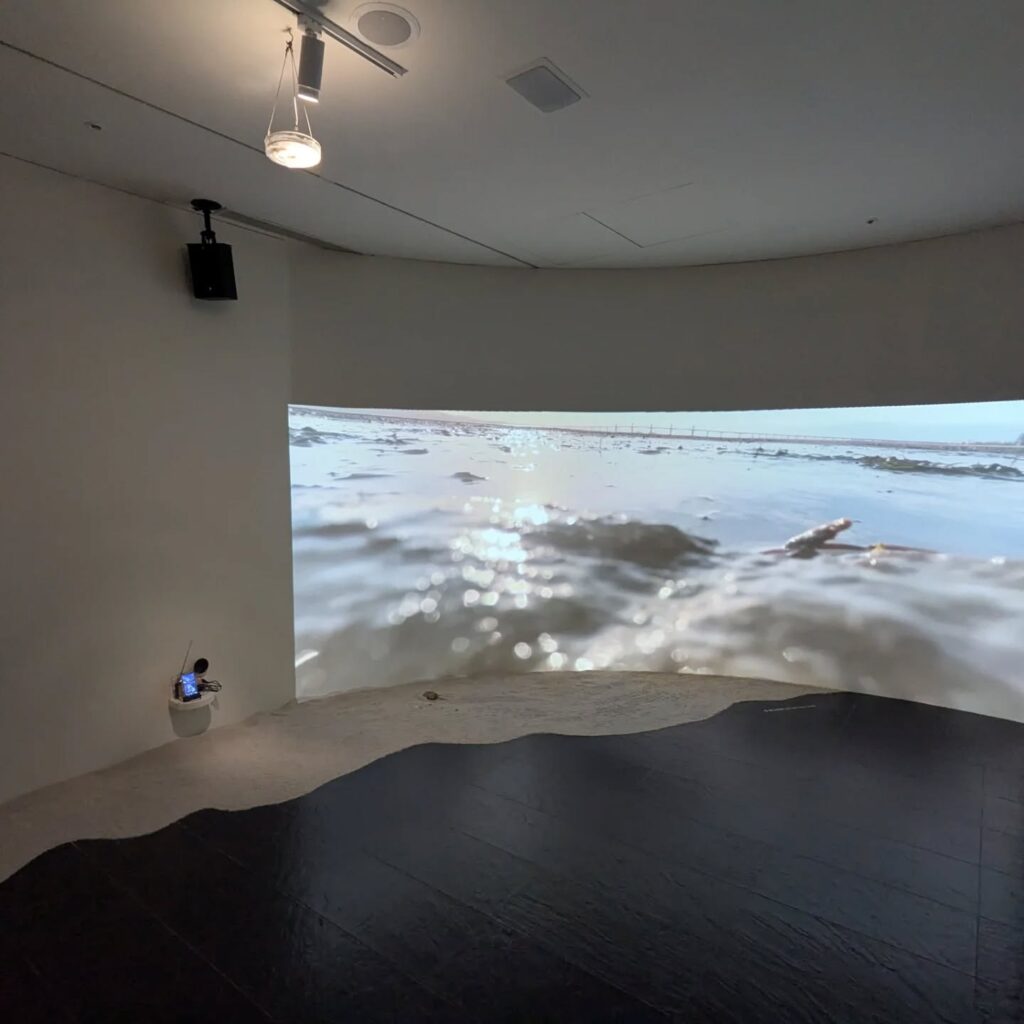
八月的淡水河(大約晚上 6 點),柯萬里
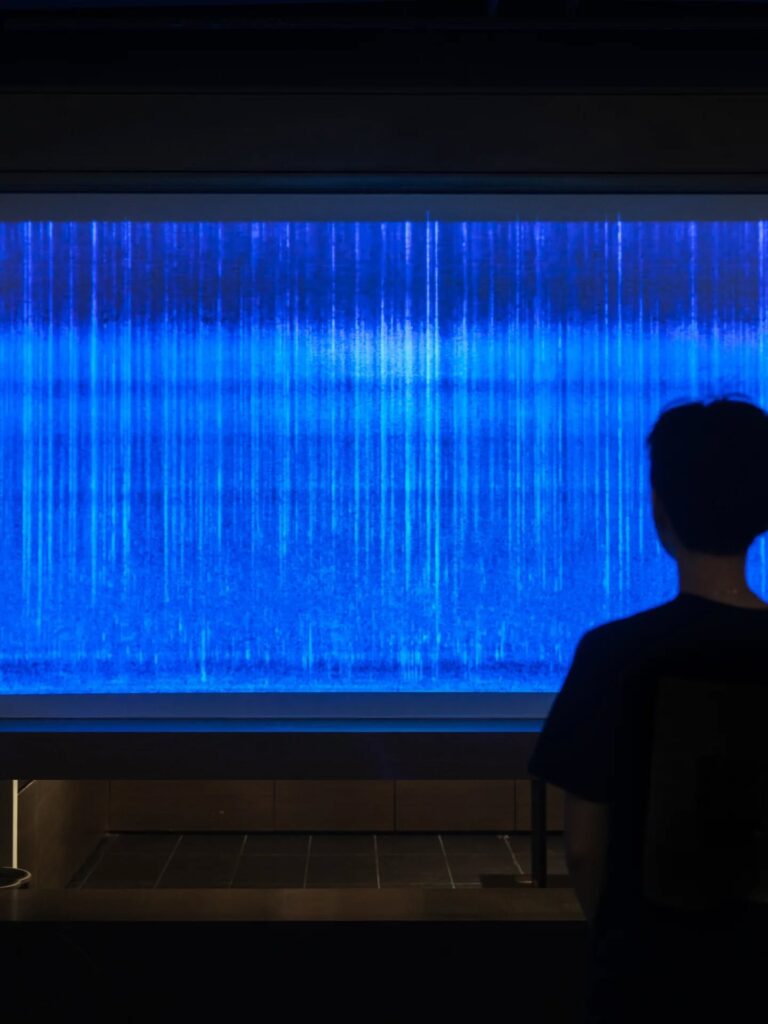
在水下聆聽,會是什麼感覺呢?藝術家柯萬里帶著水下錄音麥克風,來到熱鬧的釣魚平台,把它沉進淡水河裡,想要捕捉一種不一樣的「漁獲」。
他聽見了神祕的雜音、噴湧聲、撲通聲、咔嗒聲……但他不是在找魚的聲音,而是在傾聽另一種河流語言:來自城市的噪音、污染、人類的聲響,以及屬於「人類世」的水下音景。
藝術家想知道,我們每天製造的聲音,正在如何悄悄改變水底世界的生態節奏。
柯萬里居住與工作於倫敦,是一位環境聲響錄音師以及獨立研究者。
海妖們,吳梓安
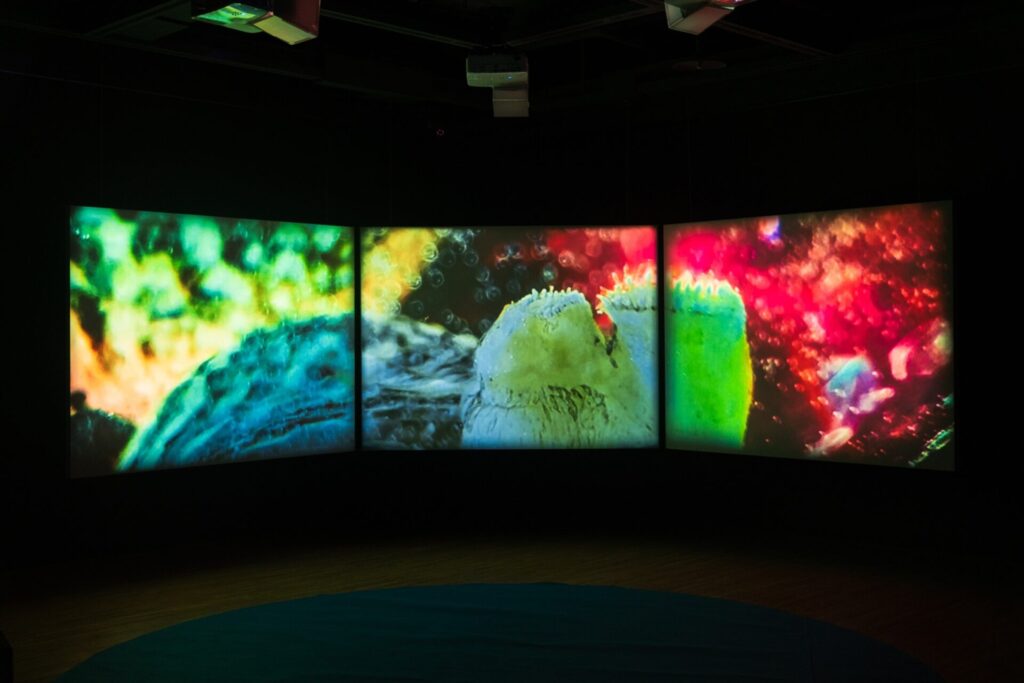
我們的世界沈沒,語言、聲音、影像皆浸泡在水中。蛤蠣吐出蜃樓、人魚變成泡沫、人類重新發生。在名為「我」的腔體中,體液伏流似近似遠忽明忽滅。水同時意味著孕育與沈沒。非人的海妖們既美麗也恐怖。本作品與實驗音樂家劉芳一長期交換漫射的好奇心,從胎兒的發生到意象的發生,觸發為敘事鬆散,帶有末世感的抽象科幻電影。
吳梓安從事實驗電影的創作、推廣、研究與擴延。他以 Super 8 和 16mm 膠卷的技法,拼貼異質的影像、聲音與文本進行創作,質問電影敘事與自我建構。他也是目聶映像文化與實驗電影團體後照鏡 Rearflex 的創始成員,參與策劃各種實驗電影映演活動。
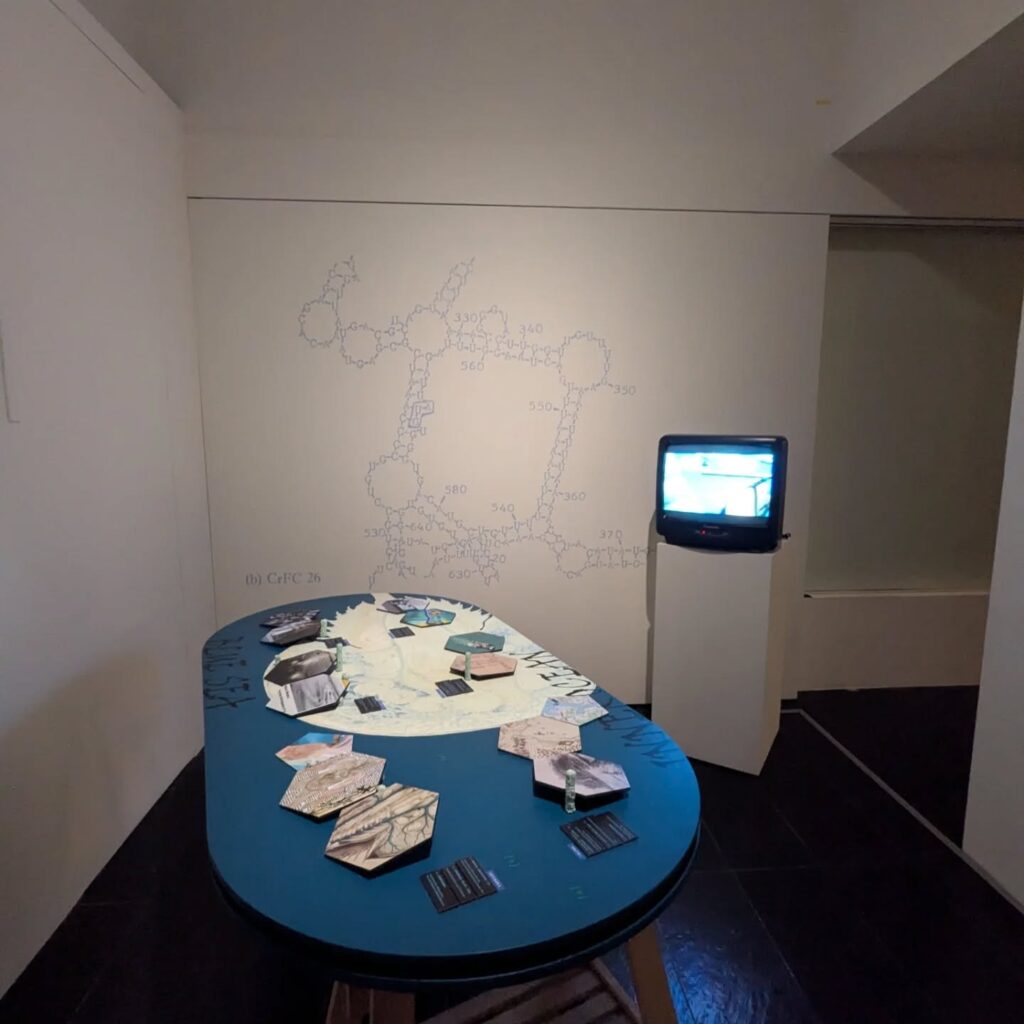
重組血,姚睿蘭
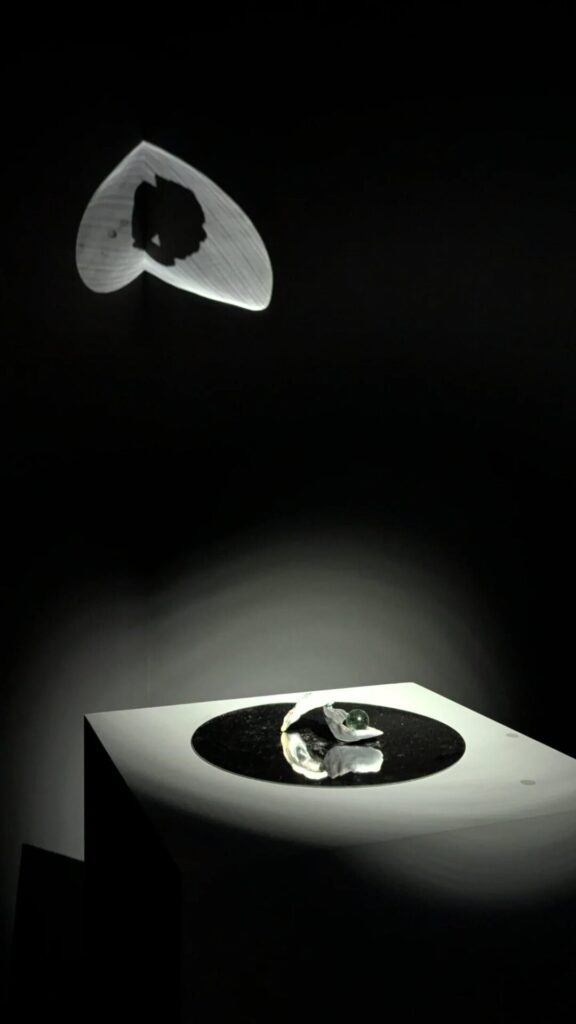
在漫長的演化中,鱟幾乎沒有天敵。
牠們的藍血中含有對細菌內毒素極為敏感的蛋白質,至今仍被廣泛應用於疫苗與藥物的無菌檢測——但疫情期間的需求暴增,也加劇了鱟的生存壓力。
金門潮間帶因戰地歷史未被過度開發,意外成為鱟的棲地,卻難擋跨海抽砂與全球生技的無聲掠奪。
這件作品循著基因重組技術與鱟血替代試劑的發展軌跡,想像一種不以掠奪為前提的物種共存未來。
姚睿蘭,媒體藝術家,目前生活創作於台北。創作著眼於科技媒體的物質性、技術語言與其所在環境之間的依存關係,以跨學科研究、藝術參與、創作、計畫⋯等,多面向實踐探討物質與價值之間的關與非關。她也是「導體計畫」的成員,以實地踏查活動參與地球科學與海洋科學的野外工作,找尋生態與科技發展的立足點。
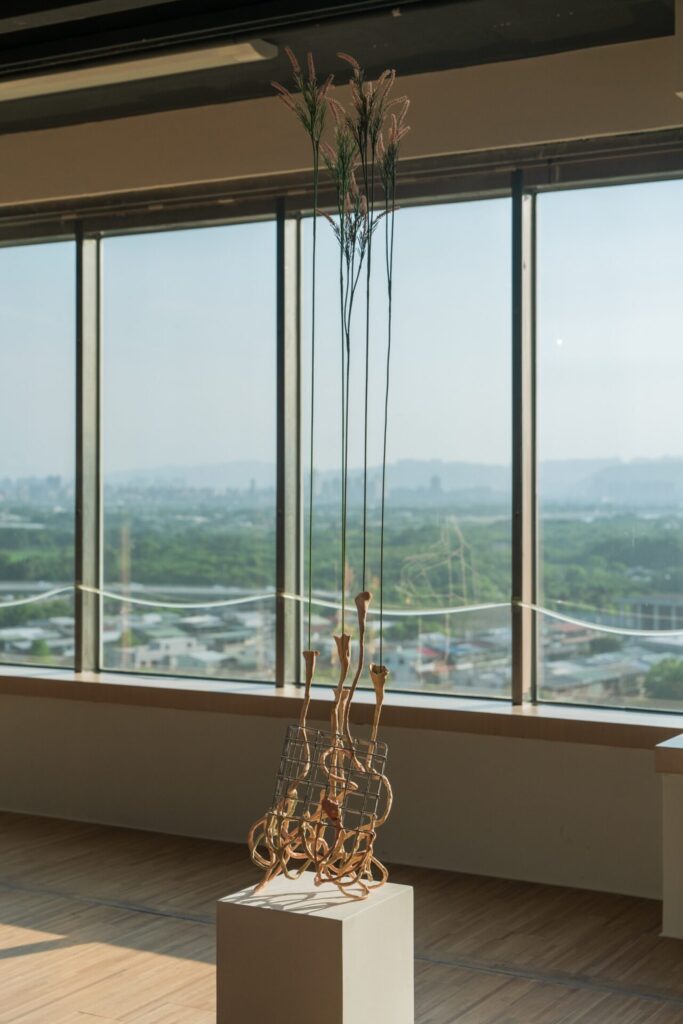
A Lagoon, A Portal,郭俞平
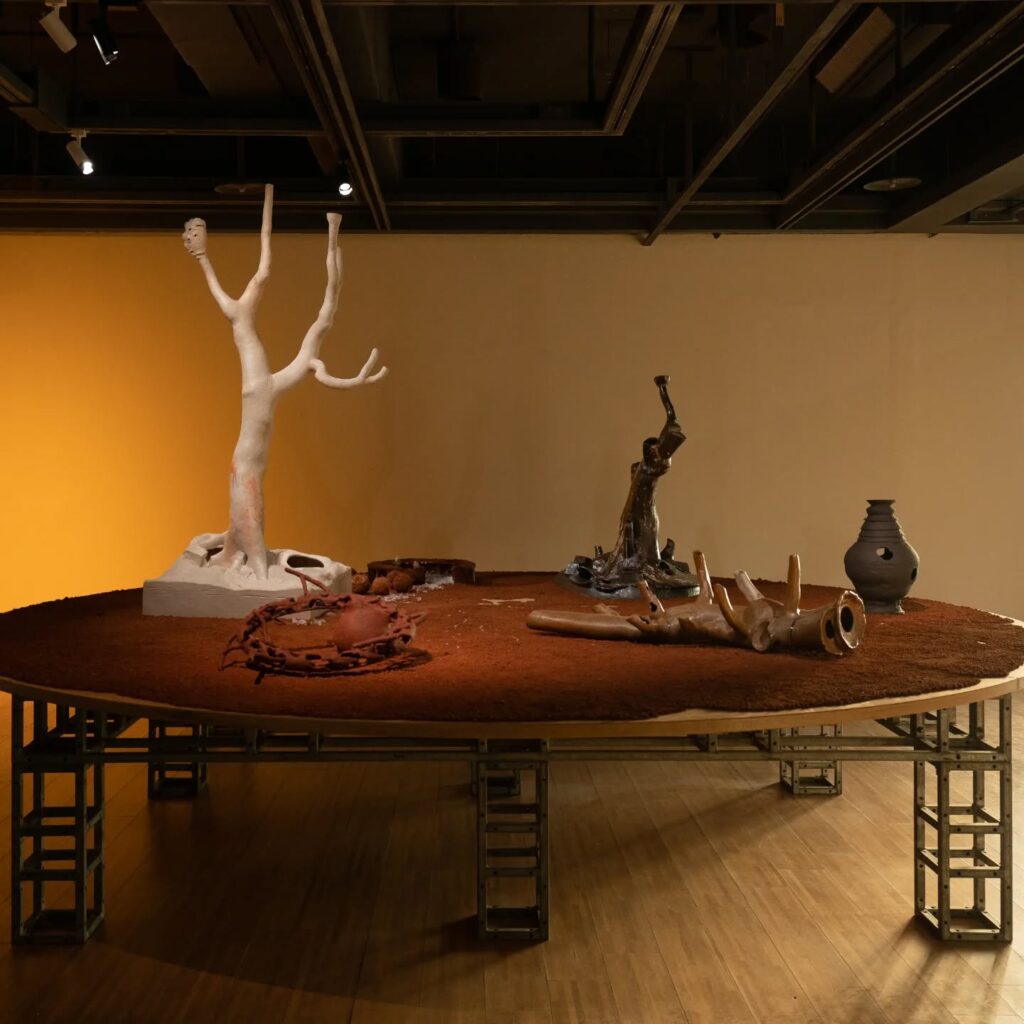
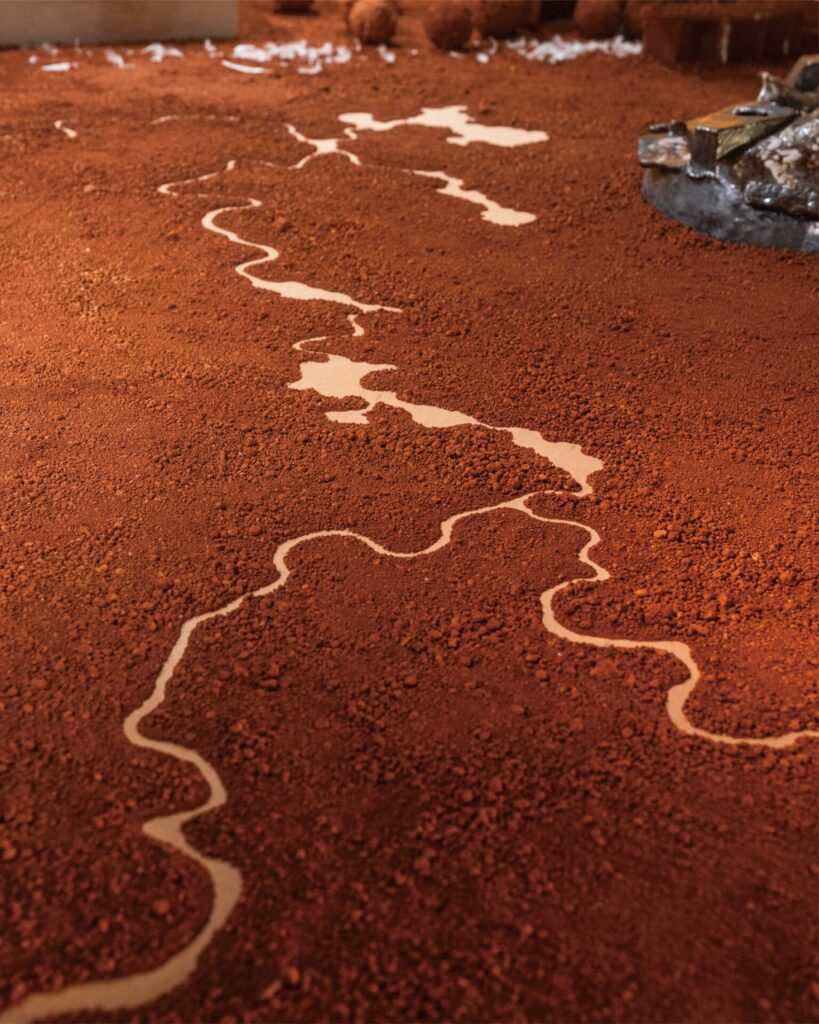
你知道嗎?這座城市曾是一片瀉湖。
在治理河道之前,人們依著水退後的泥地耕種;那些曾經的作物,如今成了荒地裡難尋的原生種,或是在車流間靜靜佇立的行道樹。
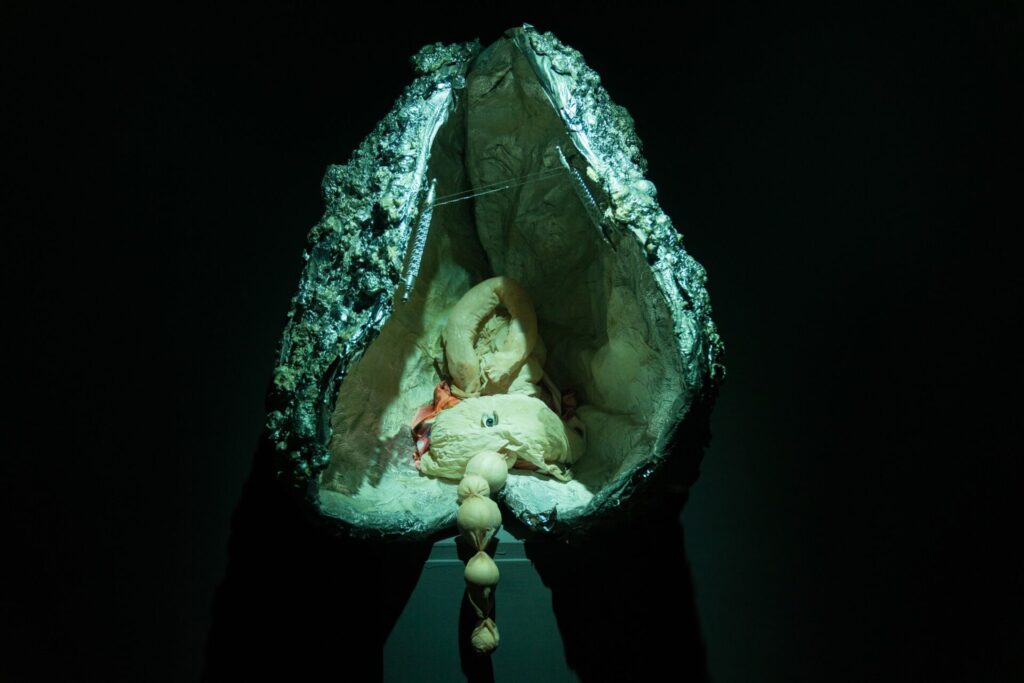
物種聚散、文化斷裂又重生。這件作品呈現一種糾纏的樣貌——像是介於生命與遺骸之間的結構,佈滿孔隙,彼此相連,有的可見、有的潛藏。
郭俞平的作品涉獵於多重的媒材,關注歷史中的個人與集體、自身與他者的認同經驗與所在地政治,及女性的感官、離散、神秘等多重經驗。近年作品見於臺北市立美術館「飛地:一部自傳的誕生」及國立臺灣美術館「地緣詩學:瀕危世界的多變特質」、「綠島人權藝術—傾聽裂隙的迴聲」等。
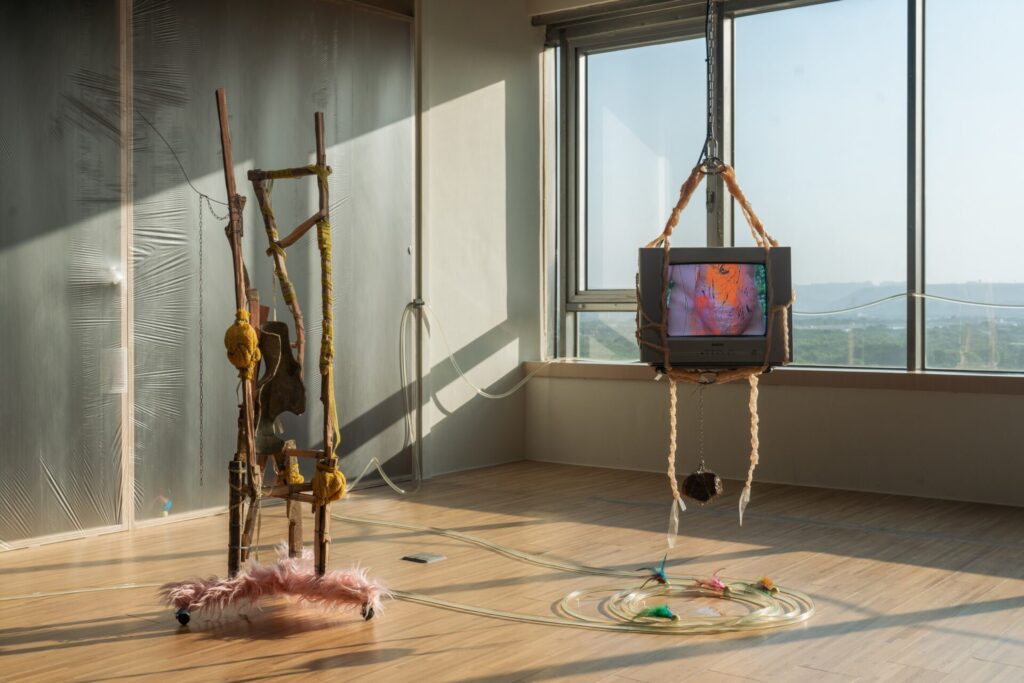
稍好的亂局,陳呈毓
水、硫磺、礦石與黑火藥交織成北投的地景記憶。
藝術家陳呈毓以雕塑回應這片祛魅與復魅交錯的土地,
透過物質、符碼與身體的纏繞試探,
捕捉環境與人之間流動的張力與感知。
陳呈毓的創作涵蓋錄像、裝置與雕塑等多元媒材,關注社會中感性的物質化表現與傳播。他的作品探討信仰、慾望、焦慮等等感性流動,並也思考著身體與傷痛、性別身份政治等不同的身體經驗如何參與著社會的感性生產,試著映射生產、消費、攫取中產生的矛盾與張力。
拆船檔案,坎達爾岡卡
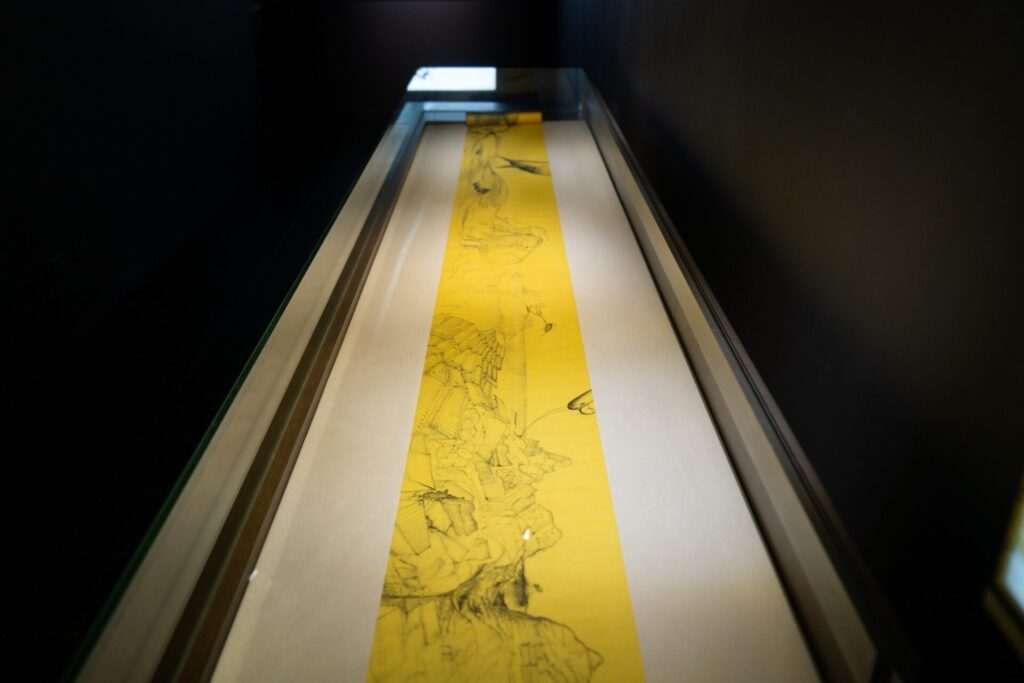
藝術家坎達爾岡卡花了十年時間,在印度阿朗的拆船廠進行田野與檔案調查,記錄巨輪登陸後的最後一段旅程,以及工人們與金屬殘骸共生的勞動現場。
此系列曾於挪威 Bergen Assembly、斯里蘭卡 Colomboscope 雙年展與阿布達比展出,這次在台灣展出他此計畫中最具代表性的作品。
坎達爾岡卡的藝術實踐主要聚焦於城市研究。他的藝術計畫大多建立在長期研究,重新思考並挑戰傳統的研究模式。cityinflux、Gentricity、build/browse 和 Stories of Philanthropic Trusts 等計劃,描繪了城市再發展中的脆弱性,記錄了再發展的時程與「盲點」,呈現一個城市正在分崩離析的樣態。對印度填海造地與推測都市發展戰鬥歷史的研究,產出了如「填海中的島嶼」和「無人認領的七島」等計劃。獲獎與藝術駐村經驗包括 Majlis 視覺藝術獎學金、UDRI 獎學金、Leverhulme 駐村、哈佛大學 SAI 駐村、Atelier Prati 駐村、Seed Funding Award – Welcome Trust and a Gasworks/Wellcome Collection 駐村。
Hong-Gah Museum
Address: 11F., No.166, Daye Rd., Beitou Dist., Taipei City 11268, Taiwan
Time: Tuesday to Sunday 10:30 – 17:30
Free Admission
Artists: Ilmari Koria, Tzu-An Wu, Jui-Lan Yao, Yu-Ping Kuo, Chen Chen Yu, Ranjit Kandalgaonkar
Tamsui River in August (around 6pm), Ilmari Koria
What does it feel like to listen underwater?
Artist Ilmari Koria brought his hydrophones to a busy fishing platform, lowering them into the Tamsui River—hoping to catch something other than fish.
He heard strange sounds: mysterious static, gushing, plops, and clicks. But he wasn’t listening for aquatic life. He was tuning into another language of the river: the noise, pollution, and human-made sounds of the Anthropocene.
Koria wants to know—how are the sounds we create quietly reshaping the rhythms of the underwater world?
Ilmari Koria is a field recordist and independent researcher based in London.
The Sirens (2022-2025), Tzu-An Wu
Our world sinks, and words, sounds, and images are all immersed in water. The clam spits out a mirage, the mermaid turns into foam, and the human reoccurs. In the cavity called “I”, the fluid flow seems to flicker and disappear. Water means both nurturing and sinking. The inhuman Krakens are both beautiful and terrifying. This work exchanges diffuse curiosity with experimental musician Fang-Yi Liu for a long time, from the occurrence of the fetus to the occurrence of imagery, which is triggered into an abstract science fiction film with a loose narrative and a sense of the end of the world.
Tzu-An Wu engages with the creation, promotion, research and expansion of experimental films. Using the technique of Super 8 and 16mm film, he collages heterogeneous images, sounds and texts to create works that question film narrative and self-construction. He is also a founding member of Rearflex, a cultural and experimental film collective, where he has been involved in curating various experimental film screenings.
The Replicate Blue, Jui-Lan Yao
Over millions of years of evolution, horseshoe crabs have had few natural predators.
Their blue blood contains proteins highly sensitive to bacterial endotoxins, and is still widely used in sterile testing for vaccines and pharmaceuticals. But during the pandemic, rising demand intensified the pressure on their survival.
The intertidal zones of Kinmen, largely undeveloped due to its military past, have become an unexpected refuge for these ancient creatures. Yet, across-the-strait sand dredging and global biotechnological extraction continue to threaten their fragile habitat.
This work traces the development of recombinant technologies and rFC (recombinant Factor C) as an alternative testing method, imagining a future of multispecies coexistence that moves beyond extractive frameworks.
Jui-Lan Yao is a multi-media artist based in Taipei. Her works focus on materiality of tech-media, the symbiosis of technological language models and their environment. Her art practices also involve researches on the scientific, participatory art practices and other creative projects. In which she explores the (non)relationship between materiality and value. Yao is a member of art collective SYSTEM OF CONDUCTORS: More-than-Human Technical Studies for Transentient Becomings. It focuses on fieldwork practices to sites of geo-science and marine science, exploring the stand points for ecological and science development.
A Lagoon, A Portal, Yu-Ping Kuo
Did you know this city was once a lagoon?
Before the rivers were tamed, people farmed on the soil left behind by retreating waters. Those crops are no longer on our plates—some have become rare native species, others now stand quietly as street trees amid the traffic.
Species gather and scatter, cultures break and revive.
This work reveals a tangled form—structures between life and remains, full of porous surfaces, some visible, some hidden, all subtly connected.
Yu-Ping Kuo’s work involves multiple media, focusing on the experience of identity and local politics of the individual and the collective, the self and the other, and the multiple experiences of women’s senses, dispersion, and mystery. Her recent works can be found in major exhibitions such as Enclave: The Birth of an Autobiography at the Taipei Fine Arts Museum (2024), Geopoetics: Changing Nature of Threatened Worlds (2023-2024) at the National Taiwan Museum of Fine Arts, and The Crow’s Feet Disappear After A Gentle Flap at the 2023 Green Island Biennial (themed Listening to the Echoes of the Rift).
Settle for a better mess, Chen Chen Yu
Water, sulfur, minerals, and black powder shape Beitou’s layered landscape.
Artist Chen Chen Yu responds with sculpture—
tracing how materials, signs, and the body entangle,
sensing the subtle tensions between place, event, and self.
Chen Chen Yu works cover a variety of multi-media creation such as video, installation and sculpture, focusing on the materialized expression and dissemination of sensibility in society. His works explore the perceptual flow of faith, desire, anxiety, etc., and also think about how different bodily experiences such as the body, pain, gender, identity, and politics participate in the perceptual production of society. They reflect on the contradictions and tensions generated in production, consumption, and extraction.
[shipbreak_dossier], Ranjit Kandalgaonkar
Artist Ranjit Kandalgaonkar spent a decade conducting fieldwork and archival research at the shipbreaking yards of Alang, India—documenting the final journey of decommissioned vessels and the laboring bodies working amidst metal ruins.
This ongoing series has been shown at Bergen Assembly (Norway), Colomboscope Biennale (Sri Lanka), and Warehouse421 (Abu Dhabi). The current exhibition in Taiwan presents some of the project’s most representative works.
Ranjit Kandalgaonkar lives and works in Mumbai and his art practice currently comprises a lens directed at the urban context of cities and scapes at the mercy of new infrastructures. Most of the projects are research-intensive – their nature varied and seek unique opportunities to rethink and challenge conventional modes of research to offer new modes of dissemination. Some of these long-term projects attempt to unlock historical and contemporary data through placing the work in the context of an unseen social history. Awards & grants include Majlis Visual Arts Fellowship, UDRI Fellowship, Leverhulme Artist Residency, Harvard University SAI Artist Residency, Atelier Prati Print Residency, The -Wellcome Trust Seed Funding Award and a Gasworks Residency.
作品攝影:林玟伶 Photo by Wen-Ling Lin
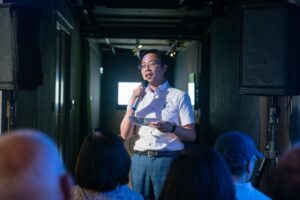
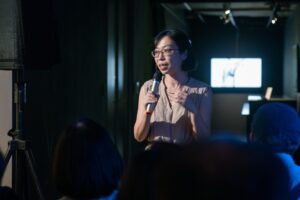
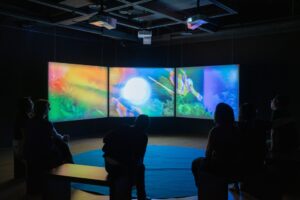
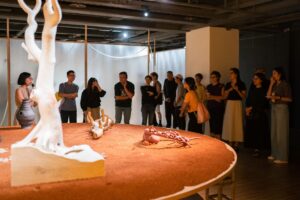
開幕攝影:林玟伶 Photo by Wen-Ling Lin