2025.10.2-11.23
S.a.L.E. Docks
Address: Magazzini del Sale, Dorsoduro 265, 30123, Venezia Ve
Artists: Chen Chen Yu, Ranjit Kandalgaonkar, Szu-Ni Wen+ Chia Hsuan Sun, Tzu-An Wu, Jui-Lan Yao
No body makes its own bodies, Chen Chen Yu
How do we imagine the body—our own, those of others, the body of objects? On social media, images merge with the materials of identity politics, transforming knowledge of the body into a sticky interplay of ideologies. The body’s transformations are heated by dopamine-driven mediation, melting like sugar: a sweet and clammy promise. With the turn of a finger or two, we can collect and craft a lavish cotton candy in any form; just like animal-shaped clouds conjured by our imagination, they are mixtures of sugary particles and salivating fantasies. These fleeting, excitable image-narratives pour forth endless solutions, flooding every screen. Bodies become wetland sculptures of imagination, their viscosity tested—how thickly and splendidly they can coat, or how swiftly they dissolve.
Chen Chen Yu’s works cover a variety of multi-media creation such as video, installation and sculpture, focusing on the materialized expression and dissemination of sensibility in society. His works explore the perceptual flow of faith, desire, anxiety, etc., and also think about how different bodily experiences such as the body, pain, gender, identity, and politics participate in the perceptual production of society. They reflect on the contradictions and tensions generated in production, consumption, and extraction.
[shipbreaking dossier], Ranjit Kandalgaonkar
One of Kandalgaonkar’s decade-long projects focuses on recording ship-breaking practices at Alang, Gujarat, in India. This time we bring some of the key works created in this project to Honggah Museum, including the epic-length, hand-drawn scroll and a sound-plus-video work created at/about the shipbreaking yard. Parts of the project have in past also led to the exhibitions ‘Shipping & the Shipped’ – showcased at the Bergen Assembly, Art & Research Triennial, 2016, ‘Sea Change’- Colomboscope Biennale, 2019 and ‘The Stonebreakers’ at Warehouse 421, Abu Dhabi in 2020.
Ranjit Kandalgaonkar’s art practice primarily comprises a lens directed at the urban context. Most of his projects are research-intensive, seeking unique opportunities to rethink and challenge conventional modes of research, offering new modes of dissemination. Projects such as cityinflu’, Gentricity, build/browse and Stories of Philanthropic Trusts map vulnerability within redevelopment strategies of urbanization, or to record timelines and ‘blindspots’— alternate markers of a city that’s unraveling. A study of combative histories of reclamation and speculation have led to projects such as Isles amidst reclamation and Seven Isles unclaimed. Awards & grants include Majlis Visual Arts Fellowship, UDRI Fellowship, Leverhulme Artist Residency, Harvard University SAI Artist Residency, Atelier Prati Print Residency, Seed Funding Award -Welcome Trust and a Gasworks/Wellcome Collection Artist Residency collaboration for which he produced an interactive drawing depicting his research on the Bombay plague of 1896.
No single drop of water diminishes in the world, Szu-Ni Wen+ Chia Hsuan Sun
Taiwan is an island, yet water feels distant. I blame this distance for my estrangement from home. Kaohsiung, a city born of coral, hides its springs beneath the ground—present, yet buried in my memory’s blind spot. From the earth, hydrogen sulfide rises with the water, crystallizing into white threads that weave through the city’s cracks, carrying time. The total amount of water on Earth never increases or decreases; the water we drink today is the same water once dinosaurs drank.
Szu-Ni Wen is a theater director and dramaturg with a master’s degree in Puppetry from Ernst Busch University of Theatre Arts Berlin. Since 2015, she has returned to Kaohsiung and re-studied the island of Taiwan. Focusing on the relationship between urban development and people, her art practice combines local memory, imagination and identity with a variety of art forms performed in atypical spaces.
Chia Hsuan Sun is a printed fabric designer & theatrical costume designer. Chia Hsuan Sun’s background is in human biomedicine crossing the field of textile craft. Shuttling through the creation and design of fabric fibers, clothing, theater, and multiple materials, she develops her works with a focus on the relationship between fabrics and people through the structure of clothing.
The Sirens, Tzuan Wu
Our world sinks, and words, sounds, and images are all immersed in water. The clam spits out a mirage, the mermaid turns into foam, and the human reoccurs. In the cavity called “I”, the fluid flow seems to flicker and disappear. Water means both nurturing and sinking. The inhuman “Shèn (mythological sea monster believed to create mirages)” are both beautiful and terrifying. This work exchanges diffuse curiosity with experimental musician Liu Fangyi for a long time, from the occurrence of the fetus to the occurrence of imagery, which is triggered into an abstract science fiction film with a loose narrative and a sense of the end of the world.
Tzuan Wu engages with the creation, promotion, research and expansion of experimental films. Using the technique of Super 8 and 16mm film, he collages heterogeneous images, sounds and texts to create works that question film narrative and self-construction. He is also a founding member of Rearflex, a cultural and experimental film collective, where he has been involved in curating various experimental film screenings. More in tzuanwu.net
The Replicate Blue.eu, Jui-Lan Yao
The Replicate Blue.eu invites participants to weave together ecological futures by ways of restructuring, replacement, and negotiation. Through the vision of wild horseshoe crabs present in field recordings taken at the intertidal zones of Kinmen island, situated at the frontline of Taiwan Strait, we present an ecological perspective as a response to the biotechnology exploiting the blood of horseshoe crabs in various human vaccine productions. The Covid-19 epidemic not only reveals humanity’s dependence on horseshoe crab reagents, it also reinforces the importance of alternatives (replicate Factor C) as strategic resources.
During the Ordovician to Cretaceous periods, the European continent was located near the equator, where warm shallow seas once supported the survival of Xiphosurans. The absence of horseshoe crabs in Europe may be related to the drastic changes in the continent over millions of years. This work presents a social-process-based art practice alongside the Taiwan marine biology community in caring for the horseshoe crabs still active in militarized marine zones that have become a forbidden area for humans. Although the Kinmen coastline has been exempted from development, thus preserved as a habitat for horseshoe crabs, it is also facing sand dredging and the open shield is no match for silent competition across the militarized Taiwan Strait.
Jui-Lan YAO is a multi-media artist based on Taipei. Her works focus on materiality of tech-media, the symbiosis of technological language models and their environment. Her art practices also involve researches on the scientific, participatory art practices and other creative projects. In which she explores the relationship and non-relationship between materiality and value. YAO is a member of art collective SYSTEM OF CONDUCTORS: More-than-Human Technical Studies for Transentient Becomings. It focuses on fieldwork practices to sites of geo-science and marine science, exploring the stand points for ecological and science development.
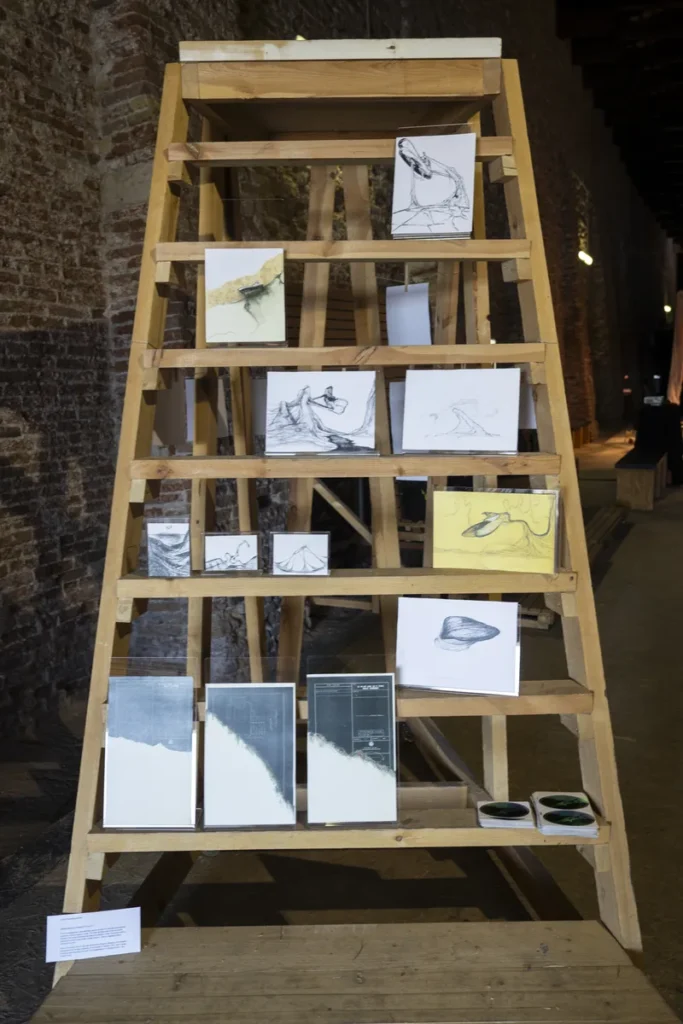
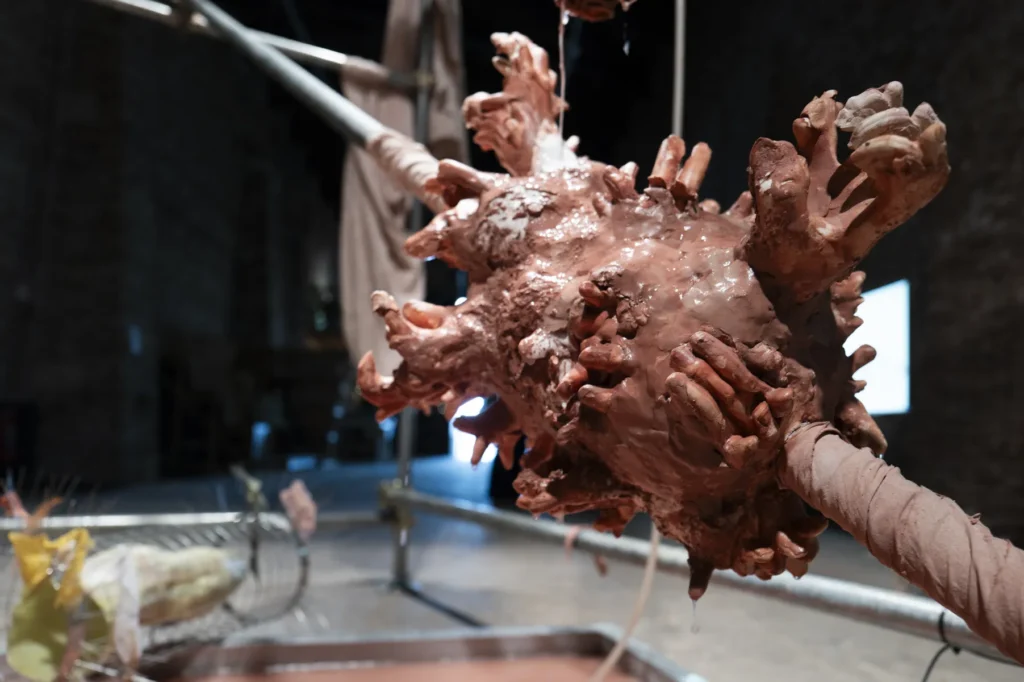
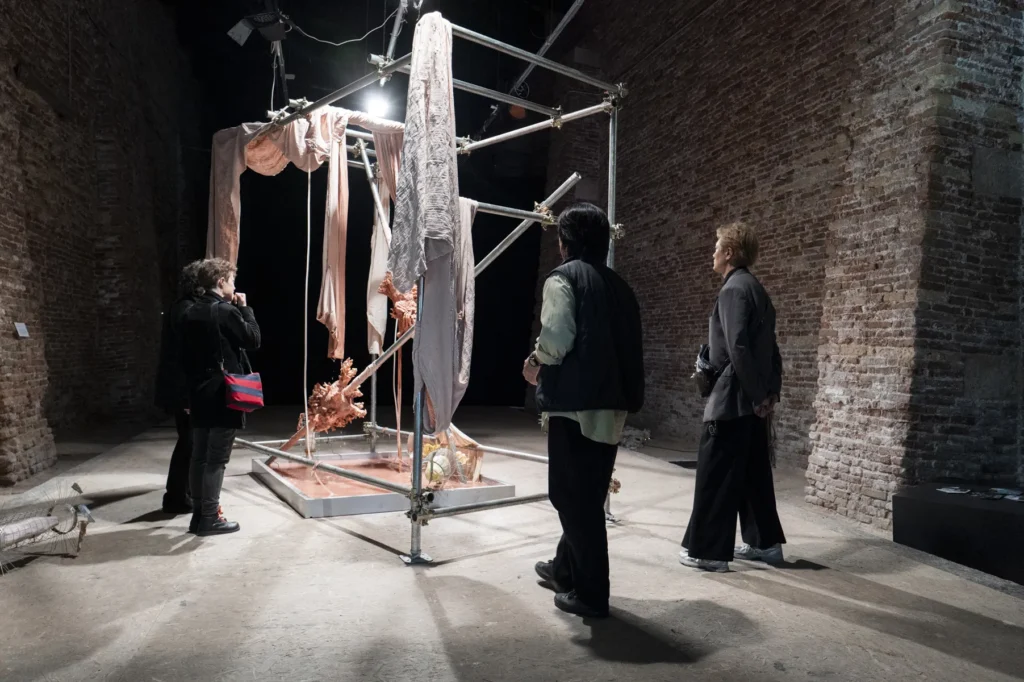
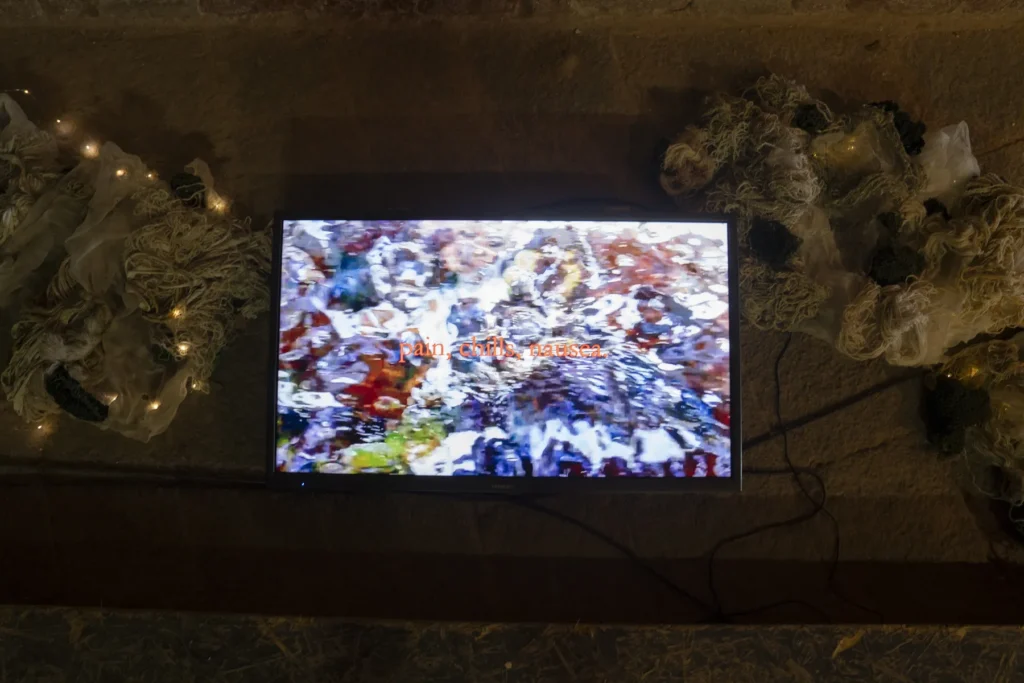
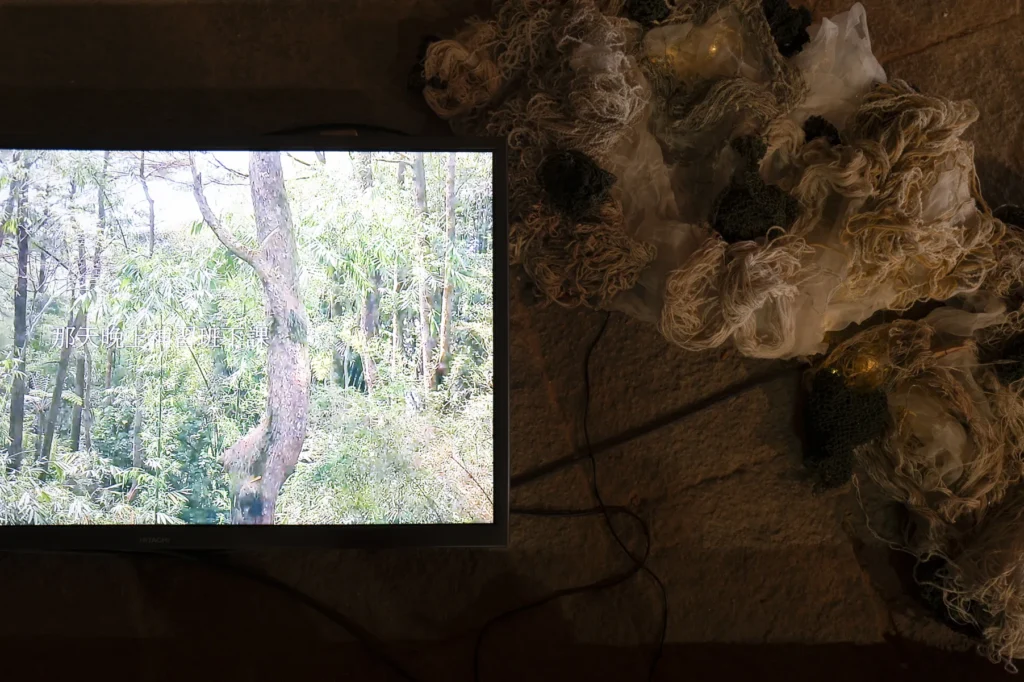
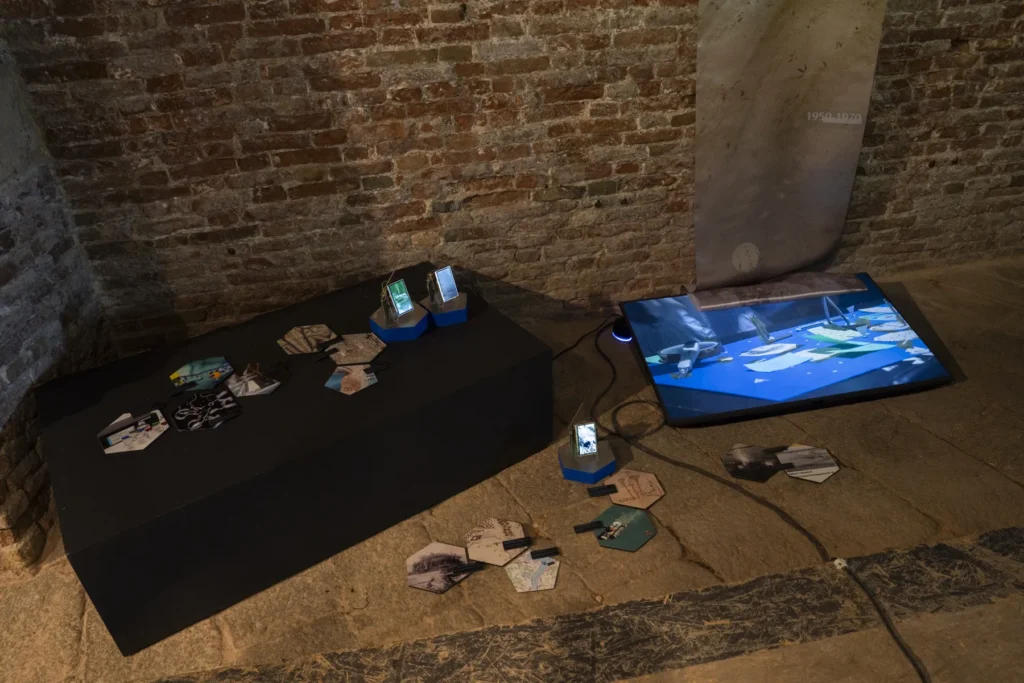
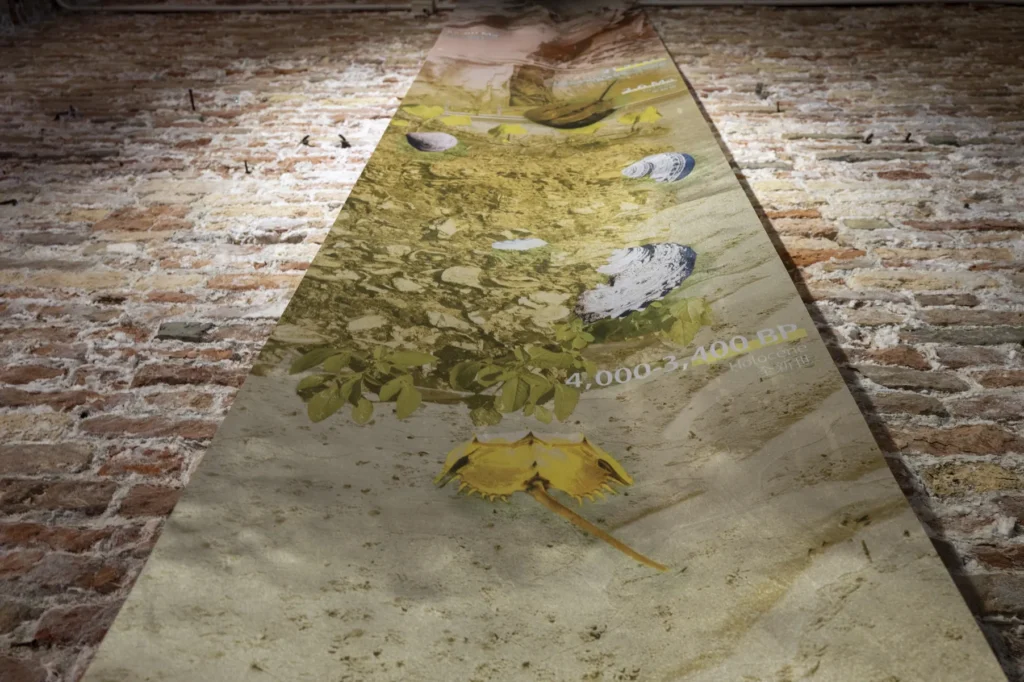
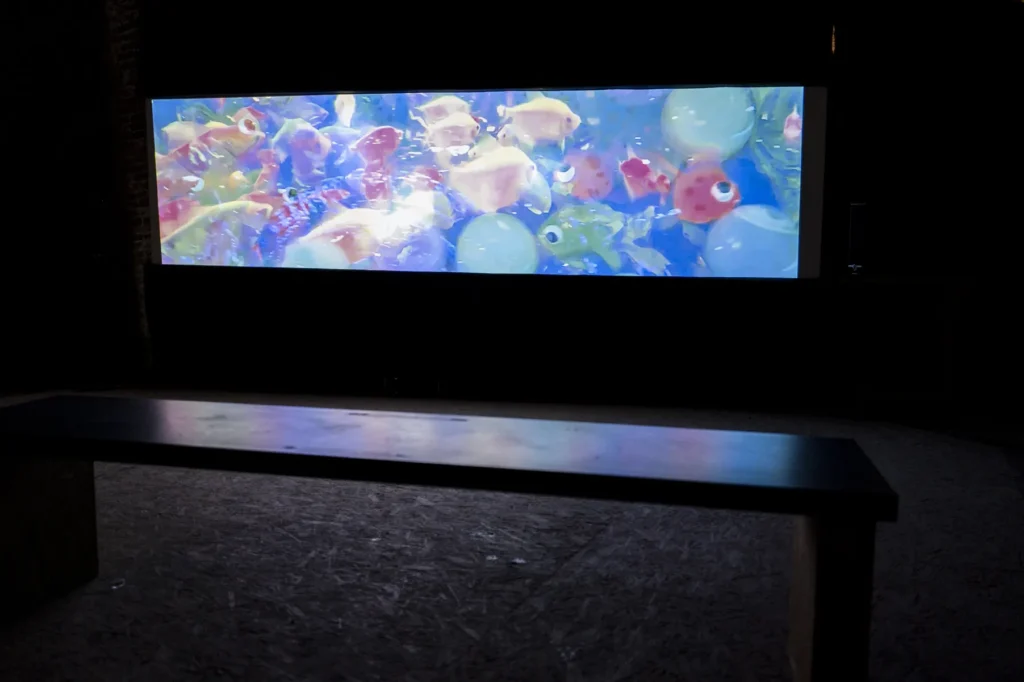
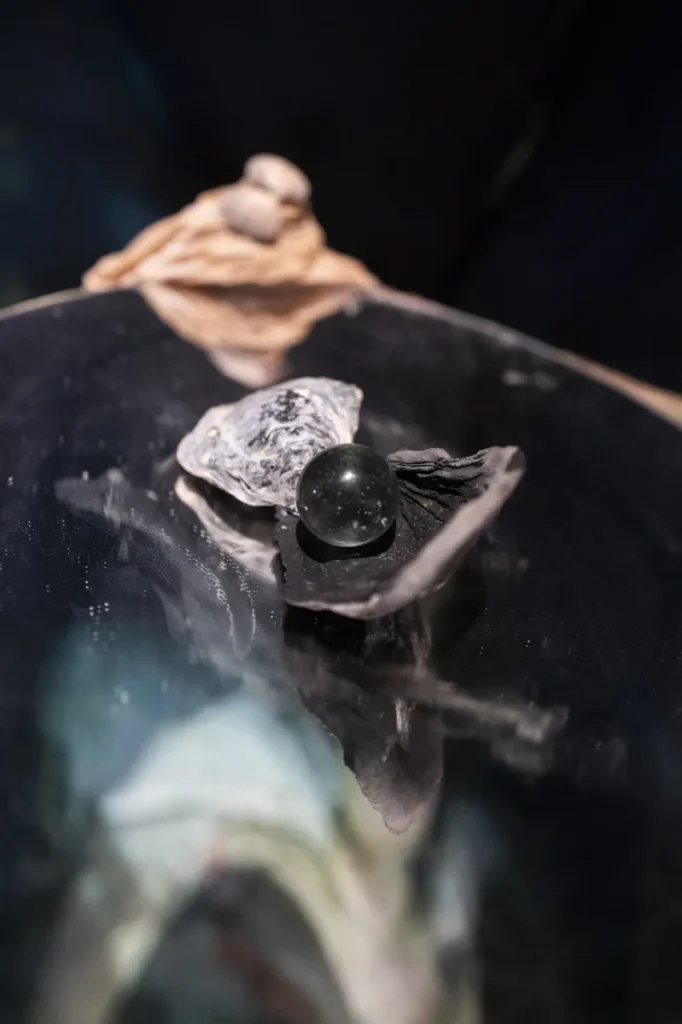
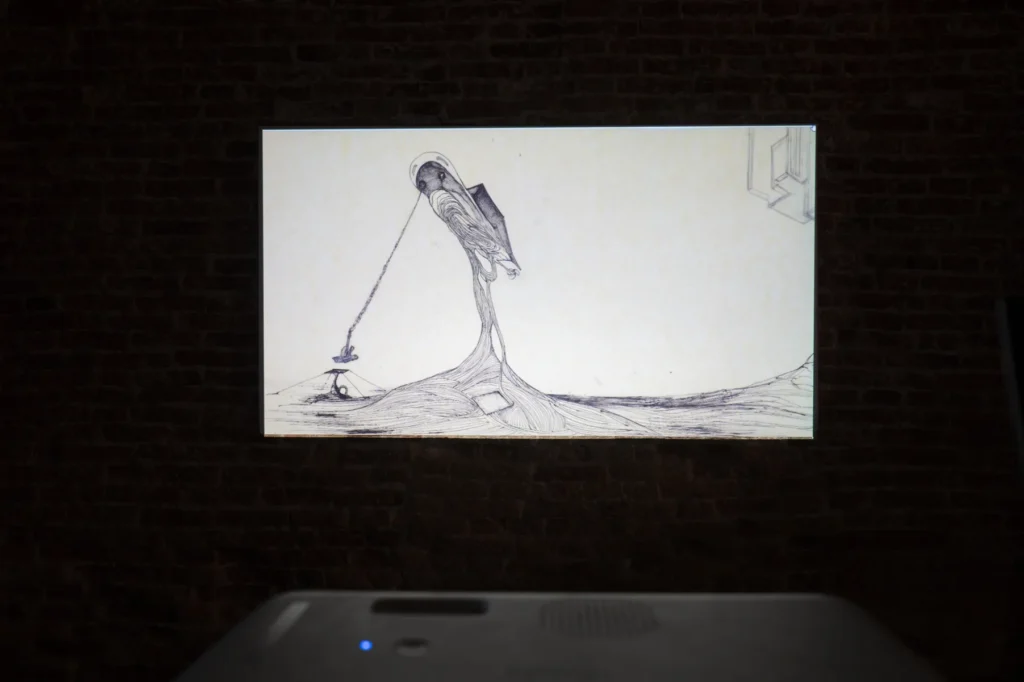
Photo by Federico Sutera
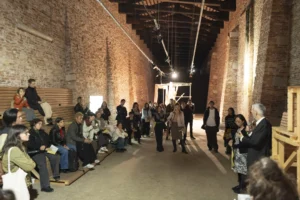
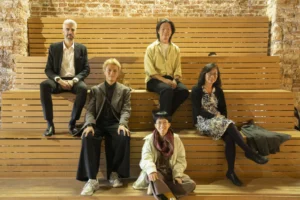
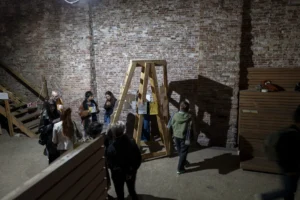
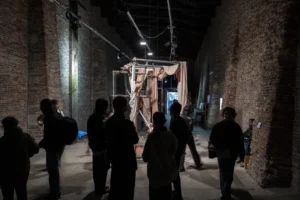
Photo by Federico Sutera